
Beyond the moment: The new rules of brand activation
In an increasingly connected world, the value of a real-world brand experience no longer ends with the experience itself.
Recent research conducted by The Harris Poll found 95% of working professionals trusted a brand more after attending an in-person event. Perhaps more interestingly, 87% went on to visit the brand’s website and wanted to continue engaging online. And this matters.
Brand activation has always done something advertising alone struggles to achieve: it turns audiences from spectators into participants. A product in a customer’s hands, an experience shared with others or a moment that invites a consumer to engage rather than simply watch. What’s changing isn’t the value of that physical moment – it’s what can now happen around it and how we make that moment work harder.
The strongest activations aren’t choosing between physical and digital. They’re using digital to extend, deepen and measure what the physical experience starts.
The activation is no longer the whole experience: it’s the trigger for what happens next.
From event to ecosystem
For a long time, we thought about an activation as a moment in time: a pop-up, launch, sampling campaign, retail experience or event. Increasingly, the opportunity is to think beyond the footprint.
A physical interaction might trigger personalised content, capture first-party data, create something worth sharing, unlock an offer, continue into CRM or connect directly to commerce. Someone who wasn’t there might discover the experience through social or creator content and enter the brand journey from somewhere entirely different. Digital doesn’t make the physical experience less important. It gives it somewhere to go – it extends the experience for those who attended and addresses FOMO for those that didn’t. But digital shouldn’t be seen as a bolt on – the experience, content, social, data and customer journey need to be considered from the outset.
Immersion is moving from spectacle to participation
For a long time marketers have focused on creating immersive experiences. And evolving technology is giving marketers extraordinary creative possibilities in this space. But more technology doesn’t automatically create a better or deeper experience. The fundamentals of an outstanding activation remain surprisingly simple: a clear central idea, meaningful participation and something people consider worth sharing. The most effective brand activations are using technology to give their audience more agency in the experience. Whether it’s movement sensors, lifting products to trigger content or mixed realities in a physical environment, this isn’t about showcasing technology for the sake of it – it’s about how we engage the audience so their experience with the brand is deeper, more meaningful and therefore more memorable. Technology only earns its place when it makes participation better.
Reach is becoming a design decision
A physical activation will always happen at a specific place and at a specific moment in time…but its influence doesn’t have to stop there. This is where the brief is changing. Instead of creating an experience and hoping people share it, amplification can be designed in from the outset. What will someone want to photograph, personalise, create or send to someone else? How could someone who wasn’t physically there participate? Where can that interaction lead next?
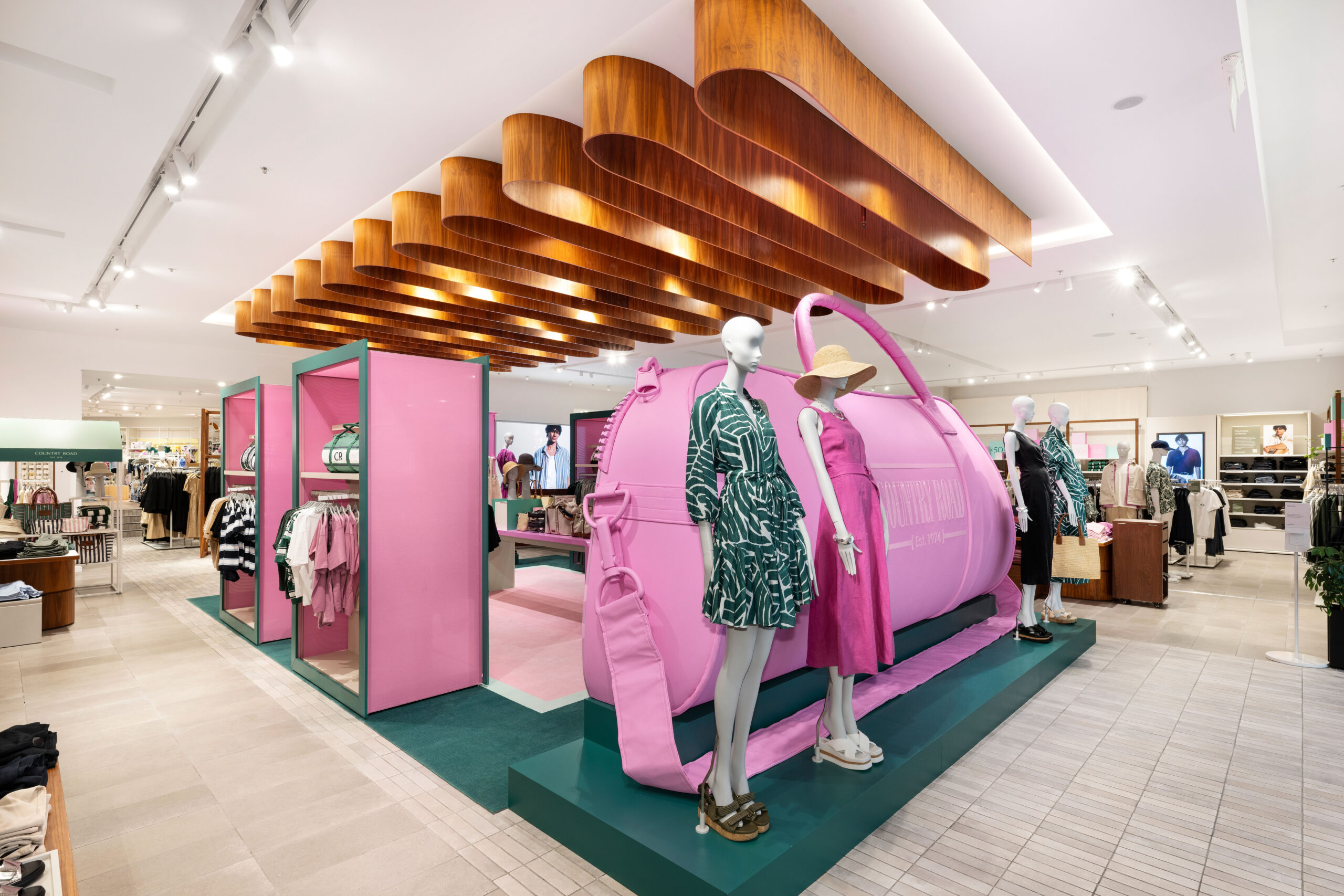
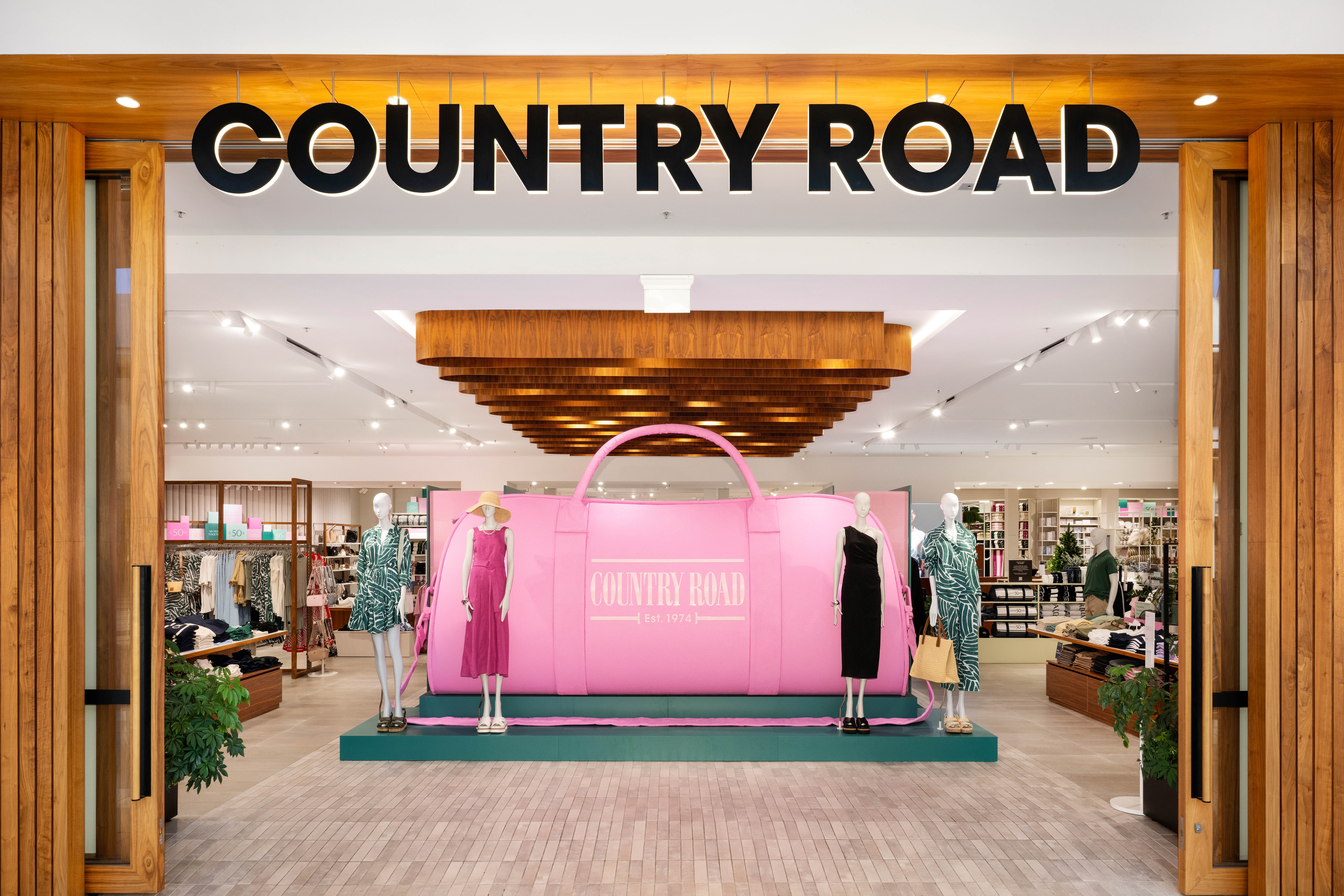
Country Road’s 50th anniversary activation is a useful example. Supersized versions of its iconic Heritage Tote transformed stores into distinctive physical brand moments, helping drive foot traffic and sales while generating social conversation beyond the stores themselves. The pieces themselves were photo-worthy, creating talkability and encouraging shoppers to share online and do the heavy lifting of campaign awareness. And it doesn’t need to be over engineered – this was a celebration of an iconic Australian brand that simply tapped into Australians love of big things (yes we’re talking big bananas, pineapples and merinos). A simple concept that delivered. And the point isn’t that every activation should be designed for social media. Rather that the physical audience is no longer necessarily the only audience. So activations should be designed with online audiences in mind.
Reach can be part of the experience design, rather than an outcome left to chance.
The best technology may be the technology we stop noticing
At EuroShop 2026, one of the clearest trends was how difficult it had become to separate the physical from the digital. Screens weren’t simply being added to environments – and rightly so. Digital, lighting, materials, content and physical structures were being designed as one connected system. And increasingly, that system is adaptive: content and experiences that respond dynamically to their context; the time of day, the environment, the audience in front of them and how each person chooses to interact. As the technology becomes more sophisticated and consumers become more exposed to it, the experience can actually feel less forced. The interface recedes. The interaction becomes intuitive and the experience feels like it was made for the person in it. Technology stops being the attraction and starts quietly making the experience work harder. For marketers, that’s a useful test. If the technology is more memorable than the idea, has it earned its place?
From exposure to behaviour
Connected experiences also give us an opportunity to think differently about measurement. Impressions and reach are easy to report and easy to misread. The more interesting signals can sit further along the journey: what does our audience do at the activation (participate, dwell time, interact, create content, exchange data) then, importantly, what do they do afterwards (jump online, share content, become leads, convert).
Not a huge surprise…but research shows that brands that elevate their customer experience are 2.5 times more likely to significantly increase market share. More importantly, its research suggests simply delivering a ‘good’ or expected or satisfactory experience simply isn’t enough. The experiences associated with stronger growth are those customers find genuinely meaningful and different. Brand activations are a chance to take the brand that little bit further.
Perhaps that’s the bigger opportunity for activations in a digital world. Not to make physical experiences more digital, not to add technology because we can…and not to chase reach at the expense of the experience itself. It’s to create something worth experiencing in the first place – what do we want our audience to experience, to feel, to take away from the interaction? Only once we know that, should we use digital to make that moment more participatory, connected, measurable and enduring.
Because physical creates the moment and digital gives it momentum.
So, what could your brand activate next?
At IVE, we bring strategy, creative, technology and production together to turn brand ideas into connected experiences that work harder, reach further and last longer.
About IVE Group
Founded in 1921 and listed on the Australian Securities Exchange in December 2015 (ASX: IGL), IVE Group is Australia’s largest diversified marketing company. With an unmatched breadth
and depth of offering, IVE guides clients from idea to execution.
Whether online, in-store, at home or in-market, IVE connects more than 2,800 clients with their customers every day. Through Creative & Content, CX & Data, eCommerce, Brand Activations, Merchandise, Uniforms & Apparel, Packaging, Print, 3PL and Distribution, IVE brings together the expertise, specialists and technology to make customer connection seamless.
Latest News
-

Why Professional Networking Is Essential for Your Career..
Why professional networking is essential to your career. We explore the types, benefits of professional networking and provide some tips to become an effective ...
-

The death of search, the fall of SaaS, the end of the web, t..
The marketing technology machine is being torn apart at the joints. According to legendary tech analyst and Forrester founder George Colony, we've just entered ...
-
Digital Australia 2024 report: Social media dominates as Tik..
A new report from Meltwater and We are Social shows hefty growth in social engagement on TikTok, ongoing loyalty to Facebook and significant advertising dollars...
-

Webinar: Strategic Networking..
Is Your Networking Just a Catch-Up Over Wine? Stop Wasting Your Time Networking! Learn networking fundamentals and how to measure your success. ...
-
Brand Finance' most valuable 100 Australian brands 2024..
Brand Finance Australia has unveiled its 'Australia 100 2024' report, ranking the nation's 100 most valuable and strongest brands. The total valu...