
The UK AI Dispatch for Marketers: What’s Heading Down Under Internationally
The forward-thinking marketing departments view AI as enterprise software for improving marketing processes – scale content marketing and optimise marketing mix. The assumption being used is that brands will hold the AI advantage, predicting consumer behaviour with ever-greater precision. A fundamental power shift may be happening. The power dynamic could be flipping, and the consumer could be on track to outsmart marketing departments unless their enterprise AI programmes are designed to keep up.
On 10 August 2026, Meta CEO Mark Zuckerberg published an essay arguing that the defining question of our age is who gets access to superintelligence AI. He rejected the idea of a single, centrally aligned AI – governments, hyperscalers, corporations etc., arguing instead that the best path is a balance of power and that if only institutions hold superintelligence AI, outcomes will favour them over individuals. He states that Meta’s mission is to distribute this capability widely, ensuring everyone has an exceptionally capable personal AI agent that understands their goals and everything they care about. Zuckerberg argues that just as putting a supercomputer in every pocket democratises information, putting a personal superintelligence AI in every hand will democratise capability. He shares that Meta is promising free or affordable access to personalised business creation tools, and agents acting solely in the user’s interest. The essay explicitly contrasts Meta’s approach with other frontier labs building primarily for governments or enterprise institutions.
For Australian marketers, this brings to the surface the disintermediation risk. When a significant number of their consumers – consumer behaviour and the cost of AI will slow the speed – use a personal AI agent to navigate the web, for the AI agent to select products, or negotiate services and transact – major card schemes like Visa already have standards for AI agents to transact on behalf of consumers – the brand is no longer speaking to the human. They are speaking to the agent. This is already happening with the shift from SEO to GEO (Generative Engine Optimisation). This could fundamentally alter the direct-to-consumer relationship that brands and agencies across Australia have spent a decade building.
A marketing department might deploy AI to optimise a campaign, but it also needs to factor in how the consumer’s personal agent will behave – e.g filter out anything that does not serve its owner’s exact, stated needs. In fact, I’ve already sat through presentations of pioneering AI research at UK universities on how different AI agents work together, collude or push back, and even at what points there are tipping points of consensus between groups of AI agents in what the researcher referred to as “AI societies” and what numbers there are tipping points where they achieve consensus.
Australian Consumer Law and the concentrated retail market mean brands will limit marketing departments’ need for a well-thought-out AI programme that is able to deal with both persuading humans and satisfying the strict parameters of an individual’s personal superintelligence AI agent. If Mark Zuckerberg’s vision is to come true any time soon, the historical power imbalance, where organisations hold the data (e.g. transactional) and the leverage, is going to flatten out. There is a question of when it would happen in Australia. In the UK and the US, we are seeing early signs.
The utopian vision of Mark Zuckerberg of perfectly and democratically balanced power with input from the AI labs, governments and others assumes these personal agents will remain completely independent. There are many questions. Whether an ad-funded platform like Meta can genuinely provide a fully private mode? Will this symbiosis of the major labs all provide governments with access to their models – we are seeing this with the UK government’s world-leading AI Security Institute and their recent incident report of AI agent behaviour that I wrote about. It remains to be seen whether commercial drivers will eventually creep into how these personal agents are developed and when it would occur. However, the trend has already started.
To navigate this, Australian marketing leaders need to have AI programmes – more than a strategy or system or platform or AI licenses – that balance innovation & quality AI competencies – context, leadership, governance, improvement and assurance. When the number of consumers deploying AI agents reaches tipping points – as mentioned, these are being researched and modelled- the variation in how brands are interpreted multiplies exponentially. This is where enterprise AI programmes founded on robust processes and governance become critical.
If and when the balance of AI power shifts from enterprise AI to a consumer screen, shield and transactors, what are some practical steps marketing leaders can take to be ready?
- Ensure they have robust AI programmes that incorporate AI governance and assurances, which for example, control data quality that is feeding consumer agents in a way that will achieve brand aims.
- Audit your product data and digital assets for machine-readability to ensure consumer agents pull facts, not hallucinations.
- As part of governance, implement performance measurement processes that separate agent-driven conversions from human-driven traffic, establishing a baseline for this new channel. We’ve already seen this with content marketing. I know a major technology company that is claiming they have taken a snapshot of all the key content on the internet when they were human generated so it can be separated from AI-generated content marketing we are seeing.
- Map the end-to-end customer journey specifically for agent intermediation.
Watching this all from the UK, where we co-founded equitably.ai many years ago (before the AI hype), we predicted more equal access to the power of AI would become a critical challenge and made it our brand. It’s nice to read an essay about it by one of the major tech titans and richest entrepreneurs in the world. Much to do to achieve it. The UK as a top (third-ranked by many indices) AI nation internationally is starting to see some shifts that Australia could benefit from.
How are your teams preparing for a world where your enterprise AI has to negotiate directly with your customer’s AI?
John Paul Danaee CQP MCQI, CPM, FAMI, FCIM
John Paul is CEO and Co-founder of equitably.ai, a Certified Practising Marketer, Chartered Marketer, and Fellow of both the AMI and CIM (UK). As a Chartered Quality Professional, he applies professional quality competencies – context, leadership, governance, improvement and assurance – to enterprise AI deployments and marketing departments. You can connect with him by contacting AMI or on LinkedIn.
Latest News
-

Why Professional Networking Is Essential for Your Career..
Why professional networking is essential to your career. We explore the types, benefits of professional networking and provide some tips to become an effective ...
-
The death of search, the fall of SaaS, the end of the web, t..
The marketing technology machine is being torn apart at the joints. According to legendary tech analyst and Forrester founder George Colony, we've just entered ...
-
Digital Australia 2024 report: Social media dominates as Tik..
A new report from Meltwater and We are Social shows hefty growth in social engagement on TikTok, ongoing loyalty to Facebook and significant advertising dollars...
-

Webinar: Strategic Networking..
Is Your Networking Just a Catch-Up Over Wine? Stop Wasting Your Time Networking! Learn networking fundamentals and how to measure your success. ...
-
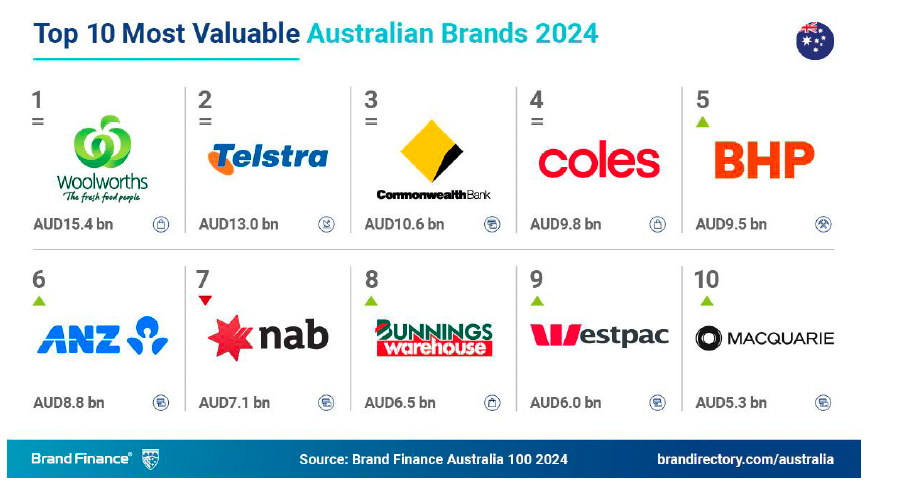
Brand Finance' most valuable 100 Australian brands 2024..
Brand Finance Australia has unveiled its 'Australia 100 2024' report, ranking the nation's 100 most valuable and strongest brands. The total valu...