

Add more content here...

Category: News

  • Are Media appoints former Big W, Woolworths marketer to newly created role

    Are Media appoints former Big W, Woolworths marketer to newly created role

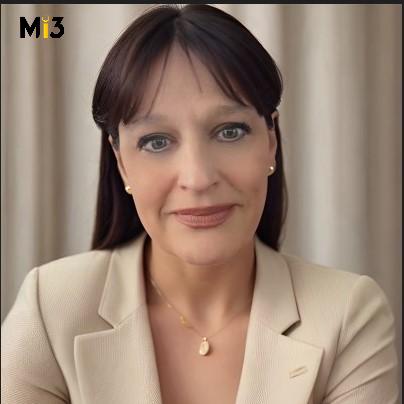
    Are Media has appointed former Big W and Woolworths marketer, Carly Bowra, to the newly created role of Director of Marketing. Bowra will report directly to Are Media CEO Jane Huxley and join the Executive Leadership Team, effective immediately.

    Bowra’s responsibilities will span across consumer and channel marketing for the company’s digital and print brands. This includes oversight of subscriptions, marketplaces, and retail channels across newsagents and supermarkets. As the company continues to expand its omnichannel and content commerce strategies, Bowra will also be tasked with building additional marketing capabilities.

    Huxley was very excited to welcome Bowra to the team. “She is a very talented, marketer with deep experience in building brands, developing and executing effective marketing plans, and leading large marketing communications and creative teams,” she said.
    “As we continue to increase the investment in our content commerce capabilities and future-proof our omnichannel brands, Carly’s strong customer focus and her proven skills in digital marketing and e-commerce are the perfect fit for our business.”

    Bowra has previously held a number of senior marketing roles across the Woolworths Group, where she spent a collective 15 years between the Big W, Woolworths Supermarkets and BWS, most recently leading marketing at Big W’s in-house agency Blue Dot.

    Since finishing up with Woolworths Group in 2022, Bowra has served as a Marketing Consultant at Seven Network.

    Bowra said: “No-one knows women like Are Media does. I’ve been a fan of Are Media’s omnichannel brands for a long time – as both a consumer and a marketer – so the chance to be part of these brands is a dream come true. Are Media is a remarkable business in terms of its content, its engagement, its connection to Australian women and its ability to attract audiences of intention. Jane and her team have exciting plans for the business, and I’m really thrilled to be part of it.”

  • Digital audio advertising on the rise, two thirds of agencies look to increase spend in 2024

    Digital audio advertising on the rise, two thirds of agencies look to increase spend in 2024

    The Interactive Advertising Bureau (IAB) Australia’s Audio State of the Nation Report has revealed that 90% of agencies utilised audio advertising in 2023, with 83% including streaming digital audio advertising as a significant or regular part of their activity.

    According to the findings, around two thirds of agencies plan to increase their investment in digital audio advertising over the coming year, including streaming audio (61%) and podcasts (64%). Sophisticated targeting and personalisation, standardised measures of incremental reach, attribution, cross-platform effectiveness, and improving programmatic supply were identified as the greatest opportunities for audio digital advertising growth. The use of Artificial Intelligence (AI) to generate content and ads was also an area of interest.

    The report, a collaborative industry project supported by 15 different media and tech companies, as well as industry body Commercial Radio & Audio, collected 219 survey responses from the advertising buy-side including media, creative and digital agencies, agency trading desks and brands/companies that buy advertising in December 2023.

    IAB Australia CEO, Gai Leroy, said: “Over the last 12 months, digital audio and podcasting has been one of the fastest growing areas of the digital advertising ecosystem and the results in the latest Audio Advertising State of the Nation Report indicate that this will continue throughout 2024. With buyers appreciating the complementary nature of audio with other digital opportunities, we are likely to see digital being increasingly included in omni-channel campaigns and welcoming a range of new advertisers to the power of audio advertising.”

    Brand building was the dominant campaign objective for media agencies using digital audio advertising (87% using streaming audio and 80% using podcast advertising for brand awareness). Fewer buyers use audio advertising for lower funnel activities such as increasing sales or conversions (33% for streaming and 30% for podcast).

    Audience attention and engagement was seen to be the key driver for audio investment (62%), followed by incremental reach (52%) and ability to complement other media (50%). Eight in ten media agencies commonly buy digital audio advertising in combination with other media, most often with other digital display advertising (including digital video).

    IAB Audio Council co-chair and Triton Digital’s Director of Marketing Development (APAC), Richard Palmer, said: “There’s no doubt the future sounds good for audio digital with most advertisers now consistently considering digital audio advertising to reach highly engaged audiences. I look forward to the IAB Audio Council’s continued collaboration to help the industry make the most of these opportunities in creative, privacy compliant and effective ways.”

    IAB State of Audio

    IAB state of audio 2

    IAB state of audio 3

  • ACCC hits Grays with $10m penalty for misleading car descriptions

    ACCC hits Grays with $10m penalty for misleading car descriptions

    The Australian Competition and Consumer Commission (ACCC) has initiated legal proceedings against Grays eCommerce Group and is pushing for a $10 million penalty over allegations the Australia-wide online auction business provided false or misleading descriptions of hundreds of cars on its site.

    The regulatory watchdog has alleged the group included incorrect information about the make, model, features, and undisclosed obvious faults. At least 750 consumers bought a car from Grays which was incorrectly described, leading to potential financial losses or inconvenience. Examples of misleading car descriptions included incorrect manufacturing year or transmission system, listing features that the actual car did not have, or failure to mention obvious faults.

    Grays has since admitted to engaging in misleading or deceptive conduct and making false or misleading representations between 1 July 2020 and 30 June 2022, and will make joint submissions with the ACCC to the Federal Court that it should pay a $10 million penalty for the breaches of the Australian Consumer Law.

    “At least 750 consumers bought a car from Grays which was incorrectly described. As a result, hundreds of consumers may have bought a car they would not otherwise have purchased, or may have paid more than they would have, had they known the correct details,” said ACCC Commissioner Liza Carver.

    “The purchase of a car is often a significant financial decision. Consumers rely on their car to get them to work, school or other commitments and they should be able to rely on the description in the auction listing to be correct.”

    Grays has already contacted some affected consumers to offer redress and the ACCC has accepted a court-enforceable undertaking from Grays to provide redress to affected consumers. The undertaking will commence once final orders are made by the Court.

    “Businesses must not mislead consumers about what they are buying. If they do mislead them, this is a breach of the Australian Consumer Law,” Carver added.

  • West HQ unveils Australian Idol campaign to celebrate Sydney Coliseum Theatre’s entertainment diversity

    West HQ unveils Australian Idol campaign to celebrate Sydney Coliseum Theatre’s entertainment diversity

    West HQ is celebrating its Australian Idol connection through a new advertising campaign for the Sydney Coliseum Theatre in Rooty Hill, Sydney.

    The campaign, which spans TV, print, digital, and out-of-home advertising, celebrates the diverse range of entertainment offered at the theatre. The campaign highlights performances by Australian Idol judge, Delta Goodrem, and former contestant, Shannon Noll, as well as the filming of the STAN series Prosper and Australian Idol.

    West HQ CEO Richard Errington emphasised the company’s 60-year history of bringing entertainment to Western Sydney.

    “For the past 60 years, delivering diverse entertainment has been a core commitment of ours, with the who’s who of Australian entertainment performing in our Rooty Hill venue,” said Errington.

    The Sydney Coliseum Theatre, a 2,000-seat venue, opened in Rooty Hill four years ago. Despite disruptions caused by COVID-19, the theatre has become a hub of entertainment in Greater Sydney.

    “With the opening of our 2,000-seat world-class Sydney Coliseum Theatre at Rooty Hill four years ago, this has not only given us more opportunity to attract and present diverse entertainment but has also helped Rooty Hill become officially idolised,” Errington added.

    The theatre’s diverse line-up of acts has included sold-out performances by Goodrem and Missy Higgins, dance by the Sydney Dance Company and Bangarra Dance Theatre, musical theatre, and family shows.

    Errington further highlighted the theatre’s commitment to the diversity of the area and its passion for good entertainment. “There is really something for everyone, with the Sydney Coliseum Theatre catering to the diversity of the area and its passion for good entertainment,” he said.

    The Sydney Coliseum Theatre will host Australian Idol until 25 March.

  • Laser Clinics Group, Ogilvy launch new global brand and campaign

    Laser Clinics Group, Ogilvy launch new global brand and campaign

    Aesthetic treatment company, Laser Clinics Group, has launched a new global brand and campaign via Ogilvy Network ANZ, ‘The Science of Feeling Good’.

    Developed by Ogilvy Network ANZ, the campaign is being run across Australia, New Zealand, Canada, and the UK, with the new platform marking a shift from functional advertising to a more emotionally driven approach. The campaign includes a TVC, social, DOOH, OOH, and in-store assets.

    Ogilvy was appointed by Laser Clinics Group in 2023 following a competitive pitch and was initially tasked with providing strategic PR, influencer and social support. Ogilvy’s remit was later expanded to include end-to-end brand strategy and creative across digital, media and in-store. The new brand campaign is the first work launched via Ogilvy since their appointment.

    Ogilvy Sydney Client Lead, Clare Lambert, said: “This is the first time any brand in the category is speaking to consumers on an emotional level. And we opted to take this approach because while Laser Clinics Group sells treatments, it does so in a way that doesn’t compel consumers to conform to any beauty standards – it just encourages them to feel good, whatever that might mean for them. Because at the end of the day, confidence isn’t a one-size-fits all – feeling confident manifests differently for everyone, which became the central point for the new brand.”

    Ogilvy Sydney ECD, Clark Edwards, said: “Today, in an industry dominated by a sea of same, setting Laser Clinics apart and giving the brand emotional resonance was a great challenge to rise to.”

    Laser Clinics Global Chief Customer Officer, Kirstie McCosh, expressed excitement about the new direction.

    “We were impressed by Ogilvy’s approach and its ability to go well beyond just functional promotion through its integrated offering. We’re incredibly excited to see the result of our partnership now in market and where our brand can go next.”

  • WGEA reveals pay gaps up to 26% in Australia’s major media companies

    WGEA reveals pay gaps up to 26% in Australia’s major media companies

    The Workplace Gender Equality Agency (WGEA) has revealed pay gaps as high as 26% in some of Australia’s major media companies and a gap between 13% and 18% for most of the large multinational advertising holding groups.

    For the first time, the WGEA has published data outlining the gender pay gap among private sector employers with a workforce of 100 or more employees. Data from almost 5000 Australian private sector employers is reflected in the figures. The national gender pay gap across all industries was 21.7%.

    TrinityP3 analysed the submissions of over 30 media and adland employers and charted their results, noting that the media and marketing industry continues to struggle with female representation in their senior ranks, particularly at the board and senior management level.

    Companies that had clear policies on the gender pay gap and who undertook regular payroll analysis performed better when it came to the gender pay gaps they reported to WGEA.

    TrinityP3 Global Marketing Management General Manager, Lydia Feely, said: “Today’s release of the employer gender pay data is an important moment in understanding the ongoing disparity of pay for women in the workforce. The data shines a real light of transparency on the pay gap.”

    Feely further noted the gender imbalance in senior roles. “This gap isn’t surprising when you look at both the senior management level and boards of major media and advertising companies, in particular in key roles like Key Management Personnel, Heads of Business or General Managers. The dominance of men in these roles remains startling.”

    She emphasised the need for tangible policies to support both men and women. “This is about having tangible policies to support both men and women when it comes to things like parental leave, flexible working but also workplaces looking at their pay policies, value contribution and ensuring they aren’t systematically paying men more than women for the same level of work.”

    TrinityP3 CEO, Darren Woolley, said: “TrinityP3 was really proud two years ago to move to lift the bar, in our industry, on some of these key issues.”

    Feely said there was a need for a collective focus on this issue. “This is an area that needs all of us to focus more on it. We all want a workplace where we are paid equitably and also feel included, supported and safe. Most business leaders want to do the right thing but it’s not always easy or simple and we have to support them in doing so. The new data today is a good first step that will hold business leaders accountable but there is also a lot more to do.”

    OOh!Media was one of multiple out-of-home companies, alongside JCDecaux, that reported results that deviated from the industry trends, with a negative gender pay gap that saw female employees earning 2.2% more than their male counterparts on average. That figure does not include CEO salary data, which will not be mandatory for WGEA reporting until April 2024.

    Women account for 48% of oOh!’s workforce of 800, and 50% of senior leadership. The company has implemented several initiatives to address gender equality, including additional gender pay equity analysis for the Board, its subcommittees and CEO annually, measures to reduce bias in performance reviews, promotion processes and recruitment, targeted individual development plans for women, and investment in industry programs such as NGEN and Future Women.

    “oOh! strives to maintain an industry leading position in Diversity, Equity and Inclusion (DEI). Beyond this result, we remain focussed on driving positive change for women, which will continue to support our position on gender pay equity,” said oOh!media CEO, Cathy O’Connor.

    “One of the drivers of this positive result is oOh!’s salesforce, which is traditionally a male-led profession. We have strong female representation in this part of our business, and as someone who started and built their career in media sales, I understand there’s so much opportunity for women to grow and develop in this space. We have seen just how women are bringing in revenue and driving strong pay outcomes, and it is important for businesses to mentor and support this talent.”

    Gender pay gap in industry 24


  • Football Australia’s ’23 strategy: ‘dramatic’ rise in women playing football after FIFA World Cup

    Football Australia’s ’23 strategy: ‘dramatic’ rise in women playing football after FIFA World Cup

    Football Australia has released a post-tournament report on the Legacy ’23 strategy, following the FIFA Women’s World Cup Australia and New Zealand 2023. The tournament, which broke new ground, reportedly generated an economic impact of $1.32 billion in Australia.

    Sarah Walsh, Head of Women’s Football, World Cup Legacy, and Inclusion at Football Australia, highlighted the societal change led by the CommBank Matildas. “The CommBank Matildas have been at the forefront of transformative societal change, challenging perceptions and gender stereotypes while advocating for sustained evolution within the Australian and international sporting landscape,” Walsh said.

    The Legacy ’23 post-tournament report calls for increased funding to ensure that the legacy of the FIFA Women’s World Cup Australia and New Zealand 2023 evolves into a sustainable foundation for a thriving, equitable, and dynamic future for football.

    Football Australia’s CEO, James Johnson, has called for continued investment and support to build on the tournament’s success and further elevate Australia’s position in global football.

    The FIFA Women’s World Cup Australia and New Zealand 2023 was a significant event, marking the first time the tournament was held in the Southern Hemisphere. The tournament’s success has led to a dramatic increase in women’s participation in football, adding pressure for government investment to close the $2.9 billion gap in facility investment across Australia.

    Football Australia is working with all levels of government to meet the needs of 1.7 million participants across the country. The Federal Government’s $200 million Play Our Way grant program was inspired by the CommBank Matildas at the FIFA Women’s World Cup.

    “The FIFA Women’s World Cup was a testament to Australia’s capability to host globally significant tournaments. The sporting, economic and societal benefits which the tournament generated, not just to football, but to other sports as well as broader Australian society are now there for all to see in the post-tournament report,” said James Johnson, CEO of Football Australia.

    Football Australia aims to secure the hosting rights for the AFC Women’s Asian Cup 2026, which will require government support at all levels. The organisation believes this will be another value-generator for Australia and a boost to the ongoing growth of Australian football and more broadly throughout Asia and the Oceania region.

    “To continue this trajectory, we aim to secure the hosting rights for the AFC Women’s Asian Cup 2026, which will require government support at all levels. We believe that this will once again be a huge value-generator for Australia and another boost to the ongoing growth of Australian football and more broadly throughout Asia and the Oceania region,” Johnson added.

    “The Legacy ’23 post-tournament report delves into the success achieved in leveraging the tournament, however, emphasises the need for increased funding to ensure that the legacy of the FIFA Women’s World Cup Australia and New Zealand 2023 isn’t merely a momentary triumph, but evolves into foundations for a thriving, equitable, and dynamic future for football,” Walsh said.

  • How to destroy customer loyalty in moments (or, when personalisation and automation go wrong!

    Jocelyn Honour
    Founder Firefly Advisory, AAICD, CPM
    February 2024

    Cast your mind back to Christmas Day (or your most recent cultural day involving time with loved family).

    Imagine you are a hardworking single mum in her early 50s who has devoted her life to her now-grown children. You love the family rituals you’ve built up over time and your children have become fun, positive adults.

    About two years ago, you were finally able to purchase a two bedroom unit in a leafy suburb – your first home – and you’ve turned it into your haven. As interest rates have risen, you’ve taken on extra work to cover the increased payments and you are doing ok.

    Now, you’re enjoying Christmas day, relaxing after the preparations as everyone is finally seated at the table, laughing and reflecting on the year just past.

    Then your phone buzzes with an incoming email message.

    It’s Christmas Day. It’s just after 1 pm. It must be a friend or extended family member right? You glance at it to see whether you’d like to respond.

    Instead of smiling and reading best wishes from a friend, your stomach sinks. It’s from your bank. On Christmas Day. At 1.12 pm. About an interest rate increase.

    As marketers, we have embraced automation for everything from reassurance to our customers that their order was successful to suggesting other items suited to their buying patterns.

    Again, this year, forecasters are emphasising the need for deep customer understanding and personalisation to customer expectations for better product recommendations, eDM campaigns and follow up.

    We love it.

    Yet, in one moment, all the good work we’ve done is destroyed when an automated message is sent, without a final overlay of common sense and/or sensitivity to cultural diversity.

    I believe it would have been relatively simple for our single mum’s bank to have set up their automation to exclude delivery of interest rate increase messages on significant cultural holidays.

    So why didn’t that happen?

    Development teams or management might say “it’s difficult”, “it’s expensive” or “we can’t cater for every culture so we can’t do it for one”.

    I would argue it’s worth it.

    What is your marketing budget? What is the value of loyalty? Almost every organisation has diversity and inclusion initiatives in place – how many of us have consulted them in planning our marketing calendars for the year?

    Empower people passionate about diversity to consult, agree and present their suggestions for the most important cultural occasions on which news like “your home loan repayments are changing” should NOT be delivered.

    Who will win in 2024?

    In my view, the winners this year will be businesses (large and small) who invest in understanding their customers on a more common sense, personal level.

    Some projects might be:

    • You work for a large retailer selling own-brand clothing – research your customers to determine what keeps the top 10 % coming back. Set a goal to make bring the next 10% to the same level.
    • You work for a premium chocolate manufacturer seeking to break into a new market or customer segment – identify your best customers and interview 4-5 a month to find out what is important to them. Why are they buying your product over others? How are interest rates affecting them? What would delight them so much they would tell their friends about your brand?
    • Your company’s SaaS solution for online rostering gets rave reviews from existing clients who bring more business to you after trial. Re-orient your marketing messaging from the super clever technology in favour of showing prospects reviews, video testimonials and addressing their pain points

    Almost all businesses say they put the customer first – unfortunately when customers try to interact with them, online and offline, the real-life experience does not bear this out.

    Get it right and you’ll win the business. We all want to believe what we read and experience what is promised.

  • How generative AI can help your lean marketing team achieve more with less

    How generative AI can help your lean marketing team achieve more with less

    Within the fluid and dynamic world of today’s marketing, juggling resources is a constant hassle for lean marketing teams, and keeping up with the industry leaders is a very real headache.

    Generative AI offers a host of advantages that totally revolutionise content creation and brand representation. When you look at these benefits closely, you’ll understand just what a powerful tool we’ve been handed and how a new era of content creation and brand storytelling is emerging. Let’s start exploring the area of AI-generated imagery and understand its potential to amplify your brand’s message.

    Creating impossible images

    We know anything’s possible with AI image generation because we’ve seen cats in military gear standing in front of a fighter plane all over social media. But getting serious for a moment, the technology really does give us the ability to generate images that are impossible not just in terms of content, but also time frames and budgets. This new canvas is limited only by our own imagination.

    Generative AI can dramatically reduce photography budgets by eliminating the need for expensive photoshoots, talent fees, and logistical planning. This is particularly beneficial for lean marketing teams looking to produce high-quality visual content on a tight budget. With AI, the cost and time associated with arranging photoshoots, waiting for perfect weather conditions, or scouting locations are virtually eradicated, significantly speeding up campaign launches.

    One of our clients needed imagery of people who travel for business. They had to clearly be in easy-to-recognise locations, like London, Hong Kong, Los Angeles, New York. To achieve this using traditional photography would have cost thousands and taken months. We were able to do it for a tenth of the cost of photography, and it took less than a week from briefing to final approved images.

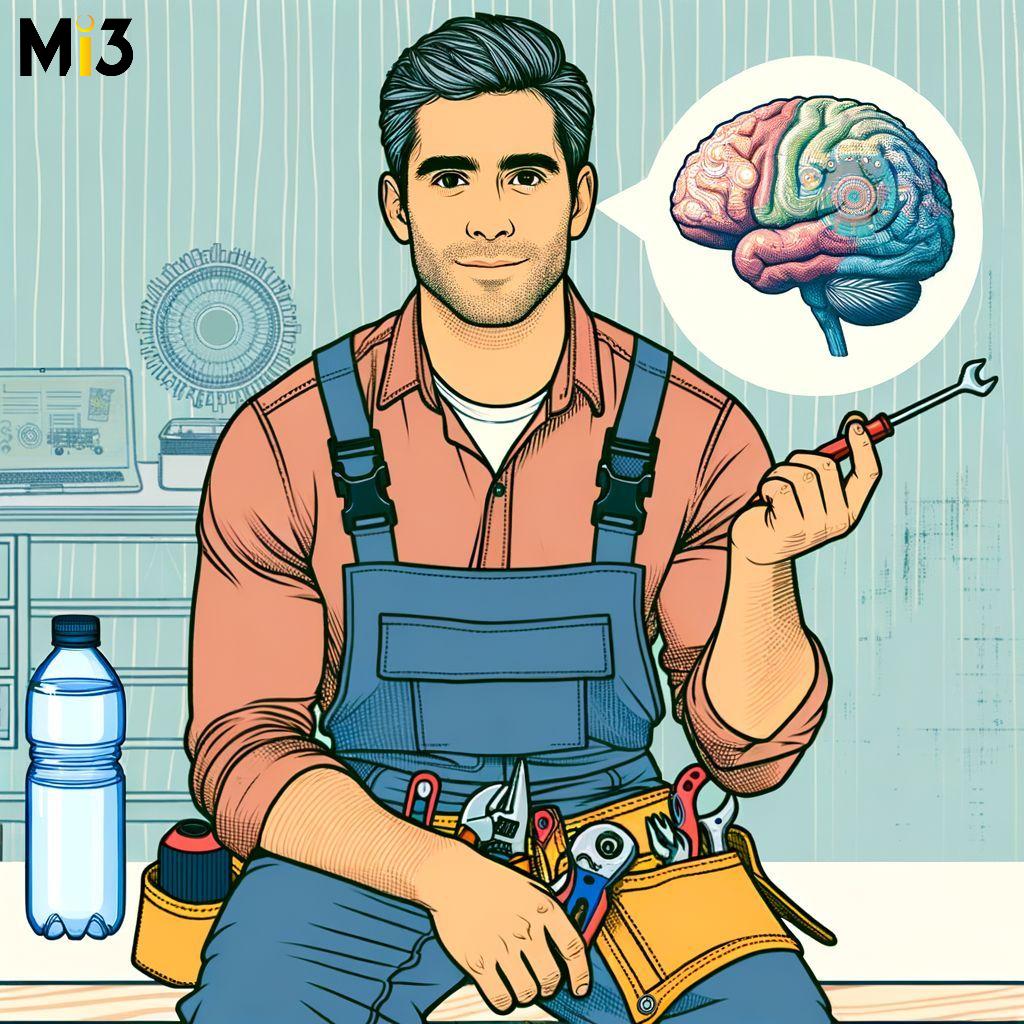
    Another case was for a roofing client. We conjured an image of a knight in full kit, standing on a residential rooftop, to convey the message of protection. This would have been a Health & Safety nightmare to shoot! We came up with the idea late morning and presented the visual that afternoon, taking advantage of distressed ad space with a media deadline of the next day.

    Creating a unique signature style

    Generative AI also offers the ability to incorporate key brand visual assets into backgrounds, allowing brands to create a distinctive signature style. At Brand IQ, we leveraged this capability to redefine the brand imagery for the Australian Marketing Institute. By integrating AMI’s new diamond logo in an elegant and subtle way into AI-generated backgrounds, we crafted a set of visuals that not only stood out but also resonated deeply with the brand’s identity and values. This approach not only enhances brand recognition but also ensures consistency across all marketing materials.

    Launching faster than ever

    The agility offered by generative AI in content creation is incredible. The knight on the roof ad above is a great example. The client was able to say yes to a fantastic media opportunity without having to re-run old material that didn’t resonate with the magazine’s feature. Another example was a brief we received at the end of October for a promotional campaign that they wanted to kick off mid-November.

    We needed an image of a tradie cooking on a barbecue – the barbecue being the prize in the promotion. Trouble was, we didn’t have a good image of the barbecue, nor did we have time to do a shoot (or the budget for talent, props etc). Using a set of carefully crafted prompts, we created an image for the campaign that worked across magazines, instore posters, entry forms and social media – all in a matter of days.

    Quality, every time

    Once an imagery style has been developed for your brand, which might be a specific use of colours, a particular photographic or illustrative style, types of people, shapes, lighting etc, we can then lock in that style code and create hundreds of images in exactly the same style, achieving a consistent look and feel for all your images.

    Generative AI is a transformative force, redefining the possibilities for lean marketing teams in the digital age. We’re loving working with it and our clients are very open to hearing about how the technology is evolving and what it can do for their brands.

    The technology just gets better every week. Within the next couple of years AI video will be at the same level that still imagery is now. So just imagine how good stills imagery will be by then!

    Want to know more about how generative AI can help your lean marketing team achieve more with less? Email me: steve@brandiq.co.nz.

  • Why Market Leaders Need Marketing Leaders

    Bruce McDonald FCPM GAICD BEcon (ANU)
    Board Director, Australian Marketing Institute; Member of Professional Advancement Committee
    February 2024

    Market leading brands, whether long established (e.g. Toyota in Australia, every year since 2003) or newly ‘crowned’ leader (e.g. Chinese EV manufacturer BYD globally, in 2023), are always under attack from their competitors and challenger brands.

    How, and how effectively, leading brands (in any sector) defend their leadership, requires them to constantly optimise the application of marketing strategies available. Continuous new product or service innovation, customer value proposition reinforcement, memorable and remarkable customer experience enhancement, application of technology to deliver frictionless business processes and ‘Blue Ocean’ thinking are just some of the numerous options which can be applied to defend and protect market dominance.

    The above defensive strategies, and numerous others, are available to the leaders of leading brands. The creation of a sustainable competitive advantage, including a source of differentiation which is valued by existing and potential customers, is the core principle driving their continued success.

    But the attainment of sustainable competitive advantage and brand differentiation doesn’t just ‘happen’. It requires numerous attributes and behaviours within the business, most importantly leadership. Marketing Leadership.

    It’s plausible to suggest that the sustained success of a business is the responsibility of the entire leadership team. But ‘when the music stops’, it’s the marketing leader who owns this responsibility.

    That means you! Are you the marketing leader in your business? What does it take for you to effectively deliver strategic marketing leadership?

    Here’s a suggested short-list of six (marketing) leadership behaviours to consider, drawn from my extensive local and overseas career, in no priority:

    • Growth Mindset, specifically revenue growth mindset. You may be already the CMO or aspire to be appointed to that role. Why not redefine your role as the CGO? Chief Growth Officer? As the custodian of your business’s brand, the responsibility to drive revenue growth starts, and stops, with you.
    •  Inspirational Leadership. If you’re a marketing leader, you’re a people leader. Your people. They constantly look to you to deliver exemplary soft skills, all the time. Remember, you need these soft skills to make hard decisions, invariably those which impact people.
    • Customer Fixation. Business success requires more than just customer satisfaction. Of the numerous metrics available (NPS, et al.), the ultimate measure of your customers’ experience with your brand is their loyalty, as demonstrated by their willingness to repurchase your product or service, with its associated favourable margin implications. As the marketing leader, your behaviour as the resident customer champion defines the culture of your team, and indirectly the entire organisation.
    • Commercial Acumen. As the marketing leader, you’re running a business, ideally a profitable business. It’s essential you understand and be able to interpret the financial and regulatory implications of your marketing decisions. Incidentally, if you’re a leader in the Not For Profit sector, NFP also means not for loss (or deficit).
    • Uncompromised Integrity and Humility. Frankly, if these words need an explanation, you may need to reconsider your leadership aspirations! Embedded within this behaviour is the principle of the Shadow of the Leader, a topic for another time.
    • Relentless Pursuit of Excellence. Perfection is unachievable and an unrealistic expectation. As marketing leader, your pursuit of excellence, and rejection of mediocrity (good enough is never good enough!) sets the standard for others to emulate.

    You’ll have noticed I earlier described the above behaviours as (marketing) leadership behaviours. Why (marketing)? Quite simply, they’re not exclusively marketing behaviours. They strengthen your brand, and your business, as you strive for, or defend your market leadership.

    That’s why market leaders need marketing leaders … like you!